Best Automation Tools for Small Businesses in 2026
3. HubSpot – Sales and Marketing Automation Platform
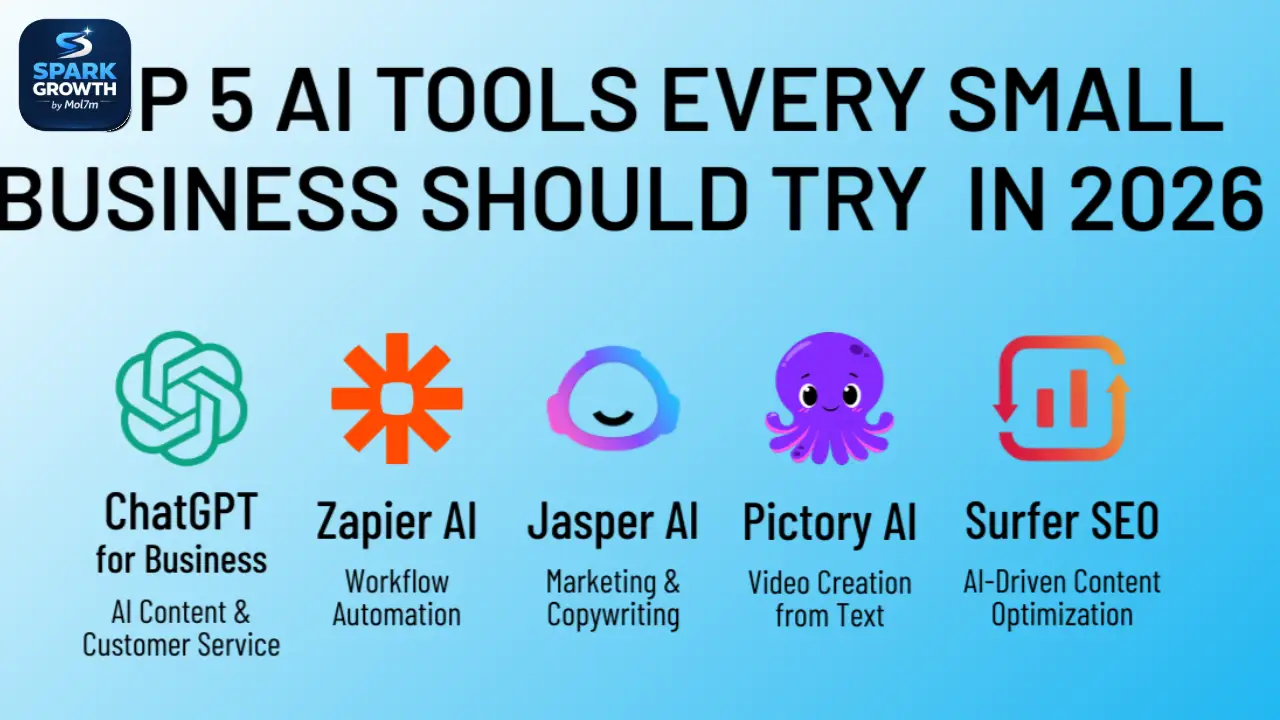
Best Automation Tools, Automation has become a critical growth factor for small businesses in 2026. With limited resources and growing competition, business owners must rely on smart automation tools to handle repetitive tasks, improve efficiency, and scale operations. From workflow automation to marketing, customer support, and data management, automation software allows small teams to perform like large organizations. This guide explores the most effective automation tools designed specifically for small businesses.
1. Zapier – Simple Automation for Everyday Business Tasks
Zapier is one of the most widely used automation platforms for small businesses because of its simplicity and flexibility. It allows users to connect different applications and automate actions between them without any coding. Businesses can automate tasks such as sending leads to a CRM, updating spreadsheets, or triggering email alerts. Zapier is ideal for teams that want quick automation without technical complexity.
Key advantages:
- No-code automation setup
- Thousands of app integrations
- Reliable task execution
- Saves hours of manual work
2. Make (Integromat) – Advanced Workflow Automation
Best Automation Tools Make is a powerful automation tool designed for businesses that need more control over their workflows. Unlike basic automation tools, Make allows complex logic, conditions, and multi-step scenarios. Small businesses can automate processes such as order processing, lead routing, and data synchronization across platforms. Its visual interface makes even advanced automation understandable and manageable.
Why businesses choose Make Best Automation Tools:
- Visual workflow builder
- Advanced logic and conditions
- Strong customization options
- Ideal for complex processes
3. HubSpot – Sales and Marketing Automation Platform
HubSpot goes beyond traditional CRM by offering built-in automation for marketing, sales, and customer communication. Small businesses use HubSpot to automate email campaigns, follow-ups, lead nurturing, and pipeline management. The platform ensures that marketing and sales teams stay aligned while reducing repetitive tasks. Its automation tools are especially useful for growing customer bases.
Main benefits:
- Automated lead management
- Email and marketing workflows
- Unified customer data
- Scalable automation features
4. Mailchimp – Automated Email Marketing for Growth
Mailchimp remains a trusted automation solution for email marketing. It allows small businesses to create automated email sequences based on customer behavior, such as sign-ups or purchases. Mailchimp helps improve engagement, retention, and conversions through personalized messaging. The platform is easy to use and suitable for businesses at all growth stages.
Top features:
- Automated email campaigns
- Audience segmentation
- Performance tracking
- Simple campaign setup
5. Trello with Butler – Task and Project Automation
Trello is a visual project management tool that becomes even more powerful with its built-in automation feature, Butler. Butler allows businesses to automate task assignments, due dates, reminders, and workflow movements. This reduces the need for manual project updates and keeps teams organized and accountable.
Best uses:
- Automating task updates
- Managing recurring projects
- Team collaboration
- Visual workflow tracking
6. AI Chatbots – Automated Customer Support Best Automation Tools
AI chatbots have transformed customer service for small businesses. Tools like modern AI chat platforms provide instant responses to common customer questions, collect leads, and guide users through purchasing decisions. These bots operate 24/7, ensuring customer support availability without increasing staff workload.
Key benefits: Best Automation Tools
- Continuous customer support
- Faster response times
- Lead qualification
- Reduced support costs
7. Accounting Automation Tools
Financial automation tools help small businesses manage invoices,Best Automation Tools, expenses, and reporting with minimal effort. Automated accounting software categorizes transactions, generates financial reports, and tracks cash flow in real time. This reduces human error and improves financial visibility for business owners.
Why automation matters:
- Accurate expense tracking
- Automated invoicing
- Real-time financial insights
- Better financial planning
8. Social Media Automation Tools
Managing social media manually can consume valuable time. Automation tools allow businesses to schedule posts, track engagement, and analyze performance across multiple platforms. With social media automation, businesses maintain consistent online presence without daily manual posting.
Key advantages:
- Scheduled content publishing
- Centralized social management
- Performance analytics
- Time-saving workflows
LOOK: HubSpot vs Zoho CRM: Which is Best?
9. Data Integration and Reporting Automation
Data automation tools help small businesses collect, sync, and analyze information from multiple sources. Automated data integration ensures reports and dashboards are always updated. This is essential for decision-making and performance tracking without manual data entry.
Benefits include:
- Automated data syncing
- Accurate reporting
- Better decision-making
- Reduced data errors
10. AI-Powered Business Assistants
AI business assistants are becoming increasingly valuable for small businesses. These tools help automate scheduling, task management, document handling, and internal workflows. AI assistants reduce administrative workload and improve operational efficiency across departments.
Core benefits:
- Task automation
- Smart recommendations
- Centralized operations
- Improved productivity
look: Best AI Tools for Small Businesses in 2026
Why Automation Is Essential for Small Businesses
Automation enables small businesses to operate more efficiently, reduce operational costs, and scale faster. By automating repetitive processes, teams can focus on strategic growth, customer relationships, and innovation. In 2026, automation is no longer optional—it is a competitive necessity.
Final Thoughts
The best automation tools for small businesses depend on specific needs, industry, and team size. Whether automating marketing, workflows, customer support, or data management, the right automation strategy can dramatically improve productivity and profitability.
FAQ – Frequently Asked Questions
What are automation tools for small businesses?
Automation tools are software solutions that reduce manual work by automating repetitive tasks, workflows, and business processes.
Are automation tools suitable for very small teams?
Yes, automation tools are especially valuable for small teams because they help achieve more with fewer resources.
Do automation tools require technical skills?
Most modern automation tools are no-code or low-code and are designed for non-technical users.
Can automation tools integrate with existing business software?
Yes, most automation platforms integrate with popular tools such as CRM systems, email platforms, and project management software.


4 Comments