How to Calculate Return on Capital: A Complete Guide for Investors and Businesses
Return on Capital Employed (ROCE) Calculate Return on Capital
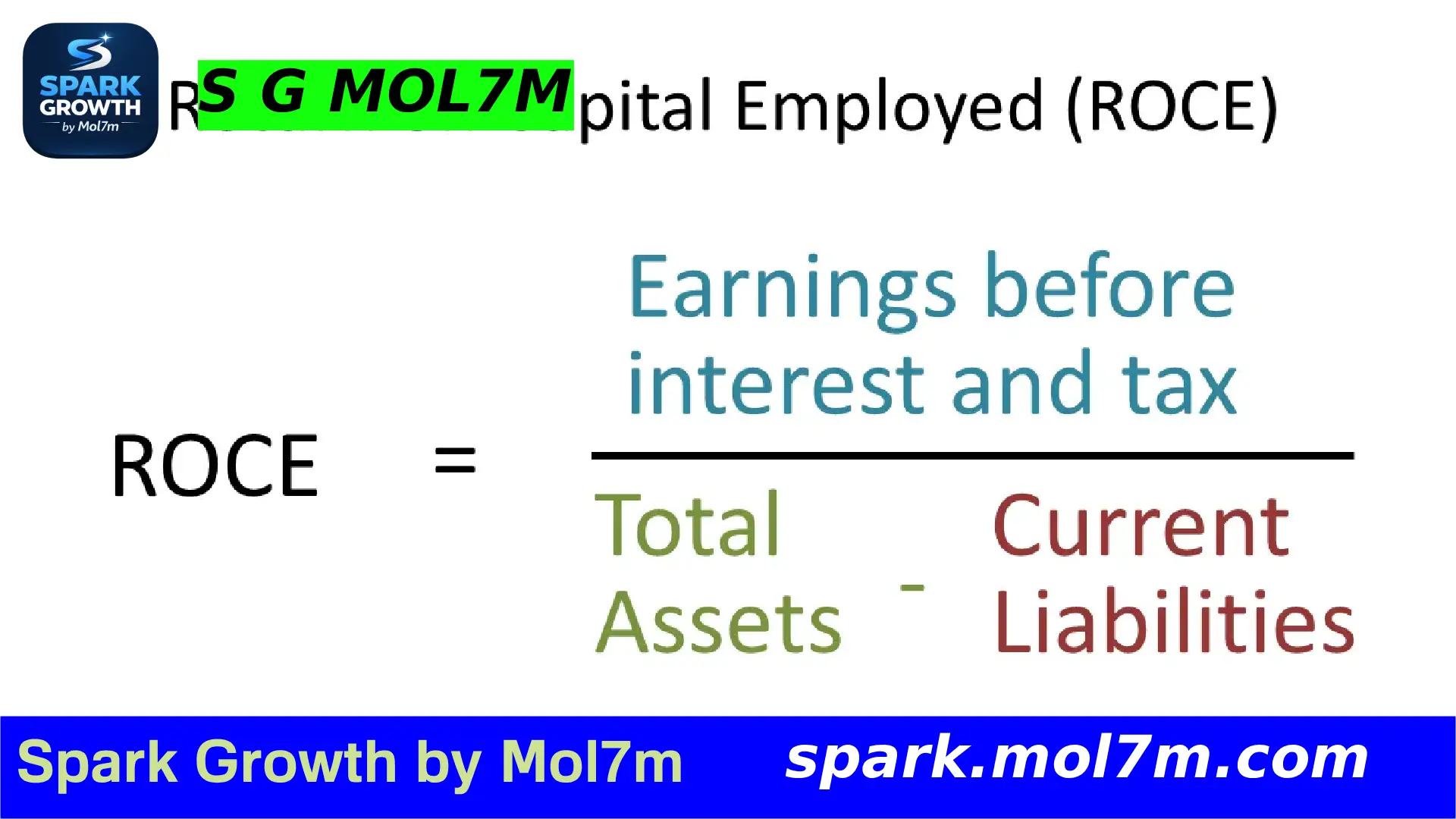
Understanding how to calculate return on capital is essential for anyone involved in investing, entrepreneurship, or business management. Return on capital is one of the most important financial metrics used to evaluate how efficiently a company or investment generates profits from the money invested. Whether you are a small business owner, a startup founder, or an individual investor, knowing how to measure this return helps you make smarter financial decisions and compare opportunities objectively.
In today’s competitive economic environment, capital is limited and must be allocated wisely. Simply generating profit is not enough; what truly matters is how much profit is generated relative to the capital invested. This article provides a comprehensive explanation of how to calculate return on capital, why it matters, the formulas involved, practical examples, common mistakes, and how to use this metric to improve financial performance. The guide is designed to be beginner-friendly while still offering depth for experienced professionals.
What Is Return on Capital?
Return on capital (ROC) is a financial ratio that measures how effectively a business or investment uses its capital to generate profit. It shows the relationship between net profit and the total capital invested.
Return on capital focuses on efficiency rather than size. A company may generate large profits, but if it requires enormous capital to do so, its return on capital may be low. On the other hand, a smaller operation with modest profits can be highly efficient if it uses capital wisely.
Key characteristics of return on capital include:
- Measures profitability relative to investment
- Indicates operational efficiency
- Helps compare different investments
- Supports strategic decision-making
Understanding this concept is the foundation for accurate financial analysis and long-term success.
look: Small Business Ideas: 40 Profitable Ideas with Low Costs
Why Return on Capital Is Important/ Calculate Return on Capital
Return on capital is one of the most reliable indicators of financial performance. It helps investors and business owners determine whether capital is being used efficiently.
The importance of return on capital lies in:
- Evaluating investment attractiveness
- Comparing business performance
- Identifying efficient use of resources
- Supporting expansion or exit decisions
- Improving capital allocation strategies
A consistently high return on capital often signals strong management, competitive advantage, and sustainable profitability. Conversely, a low return on capital may indicate inefficiencies or structural problems.
Types of Return on Capital Metrics
There are several variations of return on capital, each serving a specific analytical purpose.
Common types include:
- Return on Capital Employed (ROCE)
- Return on Invested Capital (ROIC)
- Return on Equity (ROE)
- Return on Assets (ROA)
Each metric uses a slightly different definition of capital and profit. Choosing the right one depends on the context, industry, and available data.
look: How to Start a YouTube Channel for Business: Step-by-Step Guide for Beginners in 2026
Return on Capital Employed (ROCE)
ROCE measures how efficiently a company uses its total capital employed to generate operating profit.
ROCE is especially useful for:
- Capital-intensive industries
- Comparing companies within the same sector
- Long-term performance analysis
It focuses on operating performance rather than net income, making it a popular metric for analysts and investors.
Return on Invested Capital (ROIC)
ROIC measures how effectively a company generates returns from the capital invested by both equity and debt holders.
ROIC is valuable because:
- It excludes non-operating income
- It focuses on core business performance
- It reflects value creation
Companies with ROIC consistently above their cost of capital are considered value creators.
Basic Formula for Return on Capital
The general formula for return on capital is straightforward:
Return on Capital = Net Profit ÷ Invested Capital × 100
This formula expresses the return as a percentage, making it easy to compare different investments.
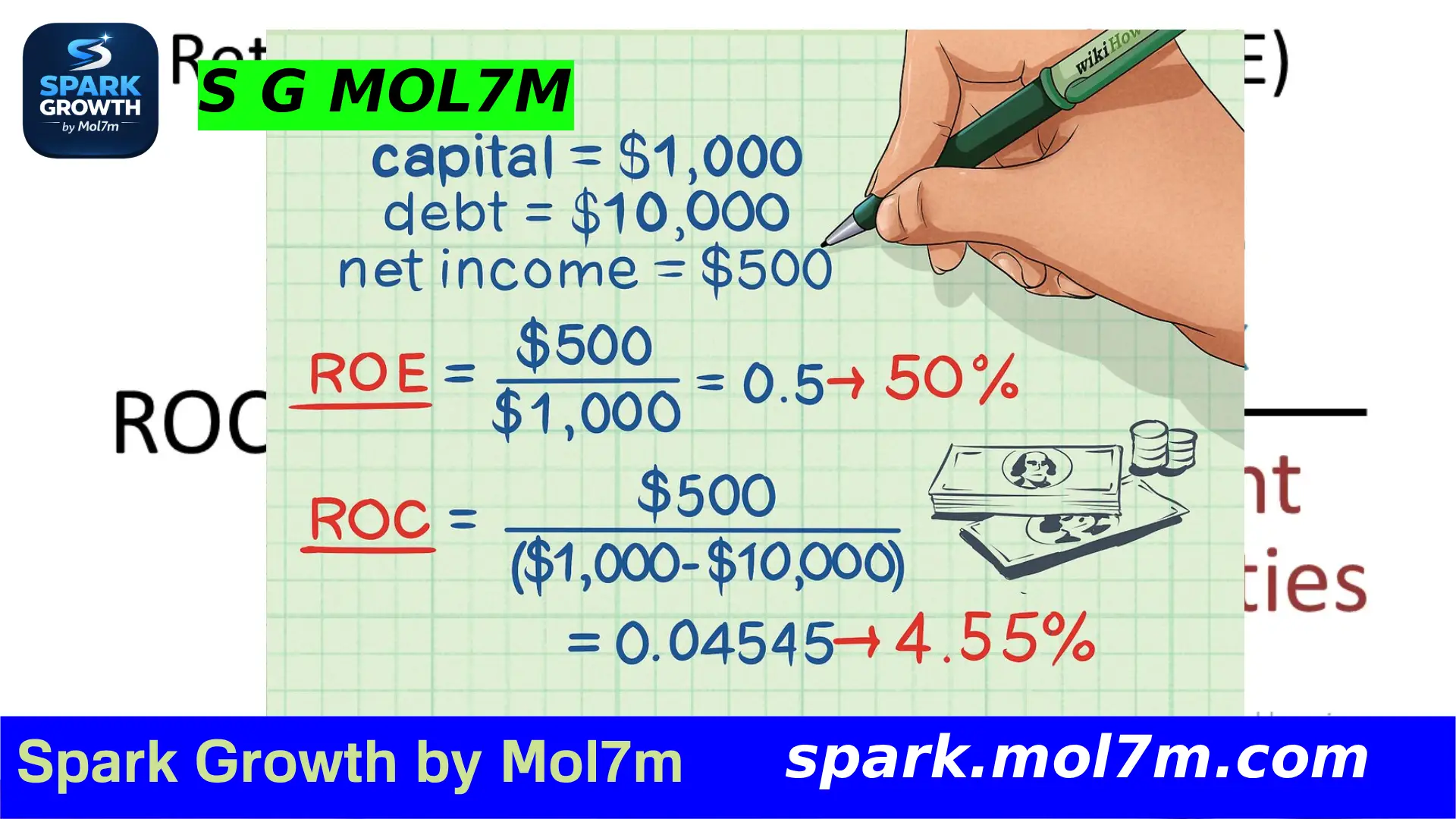
Key components include:
- Net profit (after expenses)
- Total capital invested
- Time period consistency
Understanding each component ensures accurate calculation.
look HubSpot vs Zoho CRM: Which is Best?
How to Calculate Return on Capital Step by Step
Calculating return on capital involves a systematic approach.
Steps include:
- Determine total capital invested
- Calculate net profit
- Apply the formula
- Interpret the result
Each step requires accurate financial data and consistency in measurement periods.
Identifying Total Capital Invested
Capital invested includes all funds used to operate or acquire an asset.
Common components:
- Equity contributions
- Loans and debt
- Retained earnings
- Capital expenditures
Excluding irrelevant items ensures accuracy and comparability.
Calculating Net Profit Correctly
Net profit represents earnings after all expenses.
It includes:
- Revenue
- Operating expenses
- Taxes
- Interest (depending on metric used)
Using consistent profit measures is critical when comparing returns.
Calculating Net Profit Correctly
Practical Example of Return on Capital Calculation
Consider a business that invested $100,000 and generated a net profit of $20,000.
Calculation:
- Return on Capital = 20,000 ÷ 100,000 × 100 = 20%
This means the business earned a 20% return on its invested capital during the period.
Interpreting Return on Capital Results
Understanding the number is as important as calculating it.
General interpretation:
- High ROC: efficient capital use
- Moderate ROC: acceptable performance
- Low ROC: potential inefficiency
Industry benchmarks play a major role in interpretation.
Industry Benchmarks and Comparisons
Different industries have different capital requirements.
Examples:
- Technology: higher returns
- Manufacturing: moderate returns
- Utilities: lower but stable returns
Comparing within the same industry ensures meaningful analysis.
Return on Capital vs Other Financial Ratios
Return on capital should not be analyzed in isolation.
Related ratios include:
- Profit margin
- Asset turnover
- Debt-to-equity ratio
- Cash flow metrics
Combining metrics provides a complete financial picture.
Common Mistakes When Calculating Return on Capital
Errors can lead to misleading conclusions.
Common mistakes include:
- Using inconsistent time periods
- Including non-operating income
- Ignoring inflation
- Misclassifying capital
Avoiding these mistakes improves accuracy.
How Return on Capital Helps Investors
Investors rely on return on capital to assess investment quality.
Benefits include:
- Comparing stocks objectively
- Identifying value-creating companies
- Supporting portfolio decisions
- Managing risk
High and stable returns often indicate strong competitive positioning.
How Businesses Use Return on Capital
Businesses use return on capital for internal decision-making.
Applications include:
- Budget allocation
- Expansion planning
- Performance evaluation
- Cost optimization
It aligns operational efficiency with strategic goals.
Improving Return on Capital
Improving return on capital requires increasing profit or reducing capital.
Strategies include:
- Improving operational efficiency
- Reducing unnecessary assets
- Increasing pricing power
- Optimizing working capital
Continuous improvement enhances long-term performance.
The Role of Cost of Capital
Return on capital must be compared to cost of capital.
If:
- ROC > Cost of capital → Value creation
- ROC < Cost of capital → Value destruction
This comparison is essential for sustainable growth.
Return on Capital in Small Businesses
Small businesses benefit significantly from ROC analysis.
Advantages include:
- Better cash management
- Smarter investment decisions
- Faster growth evaluation
Simple calculations provide powerful insights.
Return on Capital in Real Estate Investments
Real estate investors use return on capital to evaluate deals.
Key considerations:
- Purchase price
- Renovation costs
- Rental income
- Sale value
Accurate calculations prevent overpaying.
Return on Capital in Stock Market Investing
Stock investors analyze ROC to assess management quality.
High ROC stocks often:
- Reinvest profits efficiently
- Outperform peers
- Deliver long-term value
It supports fundamental analysis.
Using Technology to Calculate Return on Capital
Financial tools simplify calculations.
Examples include:
- Accounting software
- Financial spreadsheets
- Investment platforms
- AI-powered analytics
Technology improves accuracy and speed.
Limitations of Return on Capital
While useful, ROC has limitations.
These include:
- Accounting distortions
- Short-term focus
- Industry differences
- Inflation effects
Understanding limitations ensures balanced analysis.
Combining Return on Capital with Growth Metrics
High ROC combined with growth creates powerful results.
Key growth metrics: Calculate Return on Capital
- Revenue growth
- Earnings growth
- Market expansion
This combination signals strong investment potential.
Long-Term vs Short-Term Return on Capital
Time horizon matters. Calculate Return on Capital
Short-term ROC focuses on:
- Quick efficiency
- Tactical decisions
Long-term ROC focuses on:
- Sustainability
- Strategic advantage
Both perspectives are valuable.
Psychological Discipline in Financial Analysis
Emotions can distort interpretation.
Successful analysts practice:
- Objectivity
- Consistency
- Data-driven decisions
- Continuous learning
Discipline enhances reliability.
Conclusion Calculate Return on Capital
Knowing how to calculate return on capital is a fundamental skill for investors and business owners. This metric provides clear insight into how efficiently capital is being used to generate profits. By understanding the formulas, interpreting results correctly, and avoiding common mistakes, individuals can make smarter financial decisions. Return on capital is not just a number; it is a strategic tool that supports sustainable growth, efficient resource allocation, and long-term success in both investing and business management.
FAQ Schema on Calculate Return on Capital
Q1: What is return on capital?
Return on capital measures how efficiently a business or investment generates profit from the capital invested.
Q2: How do you calculate return on capital?
Return on capital is calculated by dividing net profit by invested capital and multiplying by 100.
Q3: What is a good return on capital?
A good return on capital depends on the industry, but generally, higher than the cost of capital is considered positive.
Q4: Is return on capital important for small businesses?
Yes, it helps small businesses evaluate efficiency, improve decisions, and manage resources effectively.
